24.2.17

Miami - Wynwood streets

Colorful murals around Wynwood streets, Miami
LOVE is the answer

Once you are done with the walled "official" gallery, make sure to book some time and explore the area randomly - which is the best and only approach that works. A lovely middle-aged gay couple rom New York stopped us to inquire where to go for more walls, to which we answered to be checking out with no plan :) this is part of the beauty of travel, getting lost is a great way to find yourself. Well not too lost... That's panic mode, yes I trust you get the point.
View Post

22.2.17

Miami - Walt Grace Vintage

Walt Grace, vintage cars and guitars, Wynwood, Miami

Artsy neighborhoods often hide pearls like Walt Grace Vintage. Store concepts that you have never seen and probably will never see again. This is why I love them so much...

Walt Grace Vintage is a unique gallery focuses exclusively on the finest investment grade automobiles and vintage guitars. Over 25 years buying, selling and collecting, they procure the finest examples of both for their collection. Lovely place where both discerning buyers and casual observers can experience the beauty and artistry, common to vintage cars and vintage guitars.

The store is located right after you exit Wynwood Walls, make sure to drop by.

This post goes to our friend Mario, huge fan of cars and guitars, as well as the one who introduced me to Enrique more than 10 years ago. Mario, we hope you can visit this place one day, we could only think of you while exploring it - but make sure to come after you reach some kind of C-Level position somewhere, to actually be able to afford something... Otherwise it will be extremely painful, so we rather encourage you to avoid it.
View Post

21.2.17

Miami - Wynwood Walls

Wynwood Walls, Miami

If you've been with us long enough, you probably know I am a sucker for modern art.

Turns out the phenomena of great art arising amid rusted warehouses is a Global Phenomena, simply because artists have a tendency to be broke but love to gather with their-likes in areas where it's somewhat affordable to live and rent a working space. We have visited some of these spaces, remember:
- 798 in Beijing
- Meatpacking in New York
- Södermalm in Stockholm
- Maboneng in Johannesburg
- Kloof & Long Street in Cape Town
- Kampong Glam in Singapore
- Daikanyama & Cat Street in Tokyo - as well as other areas further out, like Koenji
- Margareten in Vienna, Malasaña in Madrid...

Wynwood is a district in Miami where street art beats Berlin. Sorry Banksy, but seriously the size and condition of these murals are something new to me. We started exploring the area with the main hub, where a collection of selected walls is showcased together with a small museum where one can see the work of the same artists in alternative media. Very cool experience to go from mural into wall painting or sculpture.

Wynwood Walls [WEB] opens 12-20, Wed-Sat - for more Miami goodness, checkout our Miami Guide!!! We went there by rental car, but Uber is also a good choice if you won't move much further.

View Post

19.2.17

Miami - Bass museum of art

Bass museum of art Miami

Bass Museum of Art was unfortunately under renovation when we visited in December 2016, but guy's don't miss the big opening in Spring 2017, when it will re-open after renovation, as the largest art museum education facility in Miami-Dade. What we managed to visit is the temporary exhibition at the Miami Beach Regional Library space, in conjunction with the outdoor exhibits laid gracefully in the park by the entrance. Out of them all, the colossal colorful stack by Ugo Rondinone stole my heart.

Ugo Rondinone (born 1964) is a Swiss-born mixed-media artist living in New York. His work frequently employs the experiential qualities of the everyday, often reflecting on the boundaries between fiction and reality. The cairn in Miami is small sample of his work, with the masterpiece Seven Magic Mountains, currently on display along Interstate 15 just south of Las Vegas (May 2016, May 2018). This installation of seven neon stone cairns painted in artificially bright yellows, purples and other colors is constructed from car-size stone cut from a Nevada quarry and stacked 10m high.

A cairn is a man-made pile or stack of stones. The word cairn comes from the Scottish Gaelic: Càrn (plural cairn) which translates to "heap, pile up, accumulate" or more literally "heap of stones". Cairns historically have been used for a broad variety of purposes, from prehistoric times through present day. Dating back to prehistory, examples of cairns can be found having been used for many functions including those built as burial monuments, defense and hunting structures; ceremonial assemblies; astronomical formations and location markers (specifically for buried items such as caches of food or objects) as well as trail markers, among others. In modern times, cairns are most frequently used as trail markers throughout many parts of the world, in diverse climates and terrains. They vary in size and complexity, from loose conical rock piles to delicately balanced sculptures and elaborate feats of megalithic engineering. Occasionally, cairns are also decorated, either for increased visibility or religious reasons.

In addition to Rondinone's work, the park is full of interesting pieces - being the lady of Avocado our second favourite! 

For other cool spots, recommendations & maps - check out our Miami guide post!

View Post

29.8.16

Beijing - 798 Art Zone「798艺术区」

798 Art Zone, Beijing

When visiting Beijing during Spring, my friend Chris who was born and raised there, advised to check out 798 Art Zone. Also known as Dashanzi Art District, it was walking distance from Crowne Plaza Lido (my home for the week) and visible and citymaps2go - a must when you don't have data, don't speak Chinese and plan to explore a city in a country where Google is not exactly welcome. This communist factory environment (industrial interiors but for real) which was built 50 years ago, turned into an avant garde neighborhood is the ultimate plan for a weekend morning exploring an unexpected side of Beijing.

This post is a bit of a photobomb, but it captures how I felt exploring the area. Amazed by the creativity and the size of this industrial dream. There are 3 main areas I found, took about 3 hours to explore including some souvenir shopping - really cheap and cool stuff:
  1. Public Service Center for Beijing 798 Art Zone (southernmost, featuring a Tibetan Art center)
  2. 798 Art District (street installations, shops, galleries and Bauhaus-inspired arcs and windows)
  3. 751D Park (from Ace Cafe, the area from the station through the buildings with many pipes)


Background

The Dashanzi factory complex began as an extension of the "Socialist Unification Plan" of military-industrial cooperation between the Soviet Union and the People's Republic of China. By 1951, 156 "joint factory" projects had been realized under that agreement, part of the Chinese government's first Five-Year Plan. However the People's Liberation Army still needed modern electronic components, which were produced in only two of the joint factories. Since the Russians were unwilling to undertake an additional project, they suggested the Chinese to turn to East Germany, a big producer of electronics at the time. The project was green-lighted in early 1952 and a Chinese preparatory group was sent to East Berlin to prepare design plans. This project was the largest by East Germany in China, was green-lighted in 1952. Officially named Joint Factory 718, it followed the Chinese government's method of naming military factories starting with the number 7.

The architecture was influenced by the Germans, who chose a functional Bauhaus-influenced design. The plans, where form follows function, called for large indoor spaces designed to let the maximum amount of natural light into the workplace. Arch-supported sections of the ceiling would curve upwards then fall diagonally along the high slanted banks or windows; this pattern would be repeated several times in the larger rooms, giving the roof its characteristic sawtooth-like appearance. Despite Beijing's northern location, all windows face north as the light from that direction would cast fewer shadows.
798 Art Zone, Beijing

The chosen location was a 640,000 square metre area in Dashanzi, then a low-lying patch of farmland northeast of Beijing. The complex was to occupy 500,000 square metres, more than half dedicated to living quarters. Fully funded by the Chinese, the initial budget was 22MUSD, which is a lot of money today, but even more so in the 1950s.

The equipment was transported directly through the Soviet Union via the Trans-Siberian railway, and a 15 km track of railroad from Beijing Railway Station to Dongjiao Station, purpose built to service the Joint Factory 718 began production in 1957, amid a grandiose opening ceremony and display of Communist brotherhood between China and East Germany, attended by high officials of both countries. It would be fully functional until the early 1990s, when deprived of goverment support like many state-owned enterprise, it simply declined until it became obsolete. The remains of the management were reconstituted as a real-estate operation called "Seven-Star Huadian Science and Technology Group", charged with overseeing the industrial park and finding tenants for the abandoned buildings.

The Dashanzi factory complex was vacated when most of Beijing's contemporary artist community was looking for a new home. Avant-garde art being frowned upon by the government, the community had traditionally existed on the fringes of the city. In 1995, Beijing's Central Academy of Fine Arts (CAFA), looking for cheap, ample workshop space away from downtown, set up in the now defunct Factory 706. Through word-of-mouth, artists and designers started trickling in, attracted to the vast cathedral-like spaces. Despite the lack of any conscious aesthetic in the Bauhaus-inspired style, which grounded architectural beauty in practical, industrial function, the swooping arcs and soaring chimneys had an uplifting effect on modern eyes, a sort of post-industrial chic. At the artists' requests, workers renovating the spaces preserved the prominent Maoist slogans on the arches, adding a touch of ironic "Mao kitsch" to the place.

View Post

21.8.13

Summer Nail Art in Tokyo 「水色ネイル」

Uñas lunáticas, perfectas para las noches de verano.

Aún a riesgo de aburrir, os dejo las uñas de este mes.

El Nail Art en Japón es un negocio ENORME. Hay mil salones, más o menos exclusivos, franquicias y artistas especializadísimas en el calcgel (カルジェル) que viene siendo similar al concepto del shellac que está poniéndose de moda en España. Es pintura sobre tu propia uña (no son uñas postizas, ni dañan la base como hacen las acrílicas) que aguanta muchísimo (hasta 3 semanas) y permite diseños más innovadores que el esmalte tradicional.

Sin embargo, aquí es mucho más avanzado, especialmente en el talento de las artistas - como la genial Shimizu-san que desde este Viernes será Kimura-san porque SE CASA!! Pero sin dejar de trabajar :)))

Hay mil publicaciones especializadas como Gel Nail 「ジェルネイル」 o Nail Venus「ネルヴィナス」pero si os pica la curiosidad, os recomiendo echar un vistazo a la web de esNAIL donde encontraréis una creatividad sin límite. Las Japonesas suelen llevar la manicura siempre hecha, con diseños más o menos llamativos, dependiendo de su ocupación y del look que quieran proyectar al mundo.
Aunque me daba pánico al principio, me he hecho más a los colores pasteles y a los pedruscos. Este verano, lo que más está pegando es:

Los degradados 「グラデーション」

El efecto mármol

El neón y los dibujos más abstractos.

El blanco
Los pedruscos acumulados en la uña del dedo anular (es típico llevar una o dos piedrecitas en cada dedo)
Los papelitos redondos y el azul que tiene el cielo al ponerse el sol con esta humedad Pacífica.


Y vosotras, soléis cuidar vuestra manicura?

Qué tal experiencia con el shellac?

Os dan envidia estos diseños o por el contrario, os resultan ñoños y horteras?


View Post

2.11.12

Tokyo Nail, Quick in Ebisu.


Welcome to the nail paradise : Nail Quick, Ebisu. Just a short stroll south of Shibuya (or an even shorter JR Yamanote Line ride) can you find the best nail artist in Tokyo, Shimizu-san. She's talented, as a nail Dali and sweet as blueberry pie. Spending the Friday afternoons with her is seriously fun, considering the conversations with my not-good-at-all Japanese spoken language.

View Post

21.3.12

Balinghou


Hace unos cuántos días, iGoogle me informó de que se avecinaba un cambio de interfaz. Así que mejor apresurarme a elegir un nuevo diseño que reemplazara a los Sergio Rossi, que han sido mis fieles compañeros desde unos cuantos años atrás.

Google, es un poco como el BBVA. Llega ese día en el que las cosas cambian, en el que se te informa que el producto, tal y como lo conocías desaparecerá. Quieras o no, te toca cambiar. Tu  supuesto plazo fijo eran bonos del estado bancario que se enriquecía a base de timar a pequeños ahorradores temerarios, que como tú, sólo buscaban un poco de estabilidad para esa pequeña pila de dinero que tanto les había costado juntar. Eso me pasa, por poner mis fondos a descansar en un país de la Eurozona, con tanta inestabilidad. Más me valdría haber comprado coronas, cuando estaban baratas de verdad.

Volviendo al caso Google, los cambios son mucho más agradables cuando tu economía no se resiente a su pasar. El caso es que para mi nuevo interfaz, elegí el red series que incluye a unas cuantas Geishas modernas, con pose sensual.

Cuál no sería mi sorpresa… Al descubrir que la artista exponiendo actualmente en la galería del bottom floor de la tienda Diesel en Shibuya era la responsable de esas bellas imágenes que dan un toque único a mi interfaz.


Aquí la tenéis. Chenman. Nacida en 1980 pertenece a la generación de un-hijo que recibe el nombre de denomina balinghou. En China, se cree que esas personas son entes especiales, con el poder de cambiar el mundo - empezando por la sociedad que sufre bajo el puño comunista.


CHENMAN was born in 1980 in Inner Mongolia, grew up in Beijing, and studied at the China Central Academy of Fine Arts, major in graphic design and photography. In addition to her natural talent for drawing/painting, CHENMAN acquired the skill of Photography, or “extended function of painting”, that led to create her own “visual language.” The series of cover artworks for fashion magazine in Shanghai “VISION” she produced while she was a student in 2003, was acclaimed as the most unique cover image in Chinese magazine history, and she got a flood of shooting offers from celebrities. She became a leading figure of “80hou(balinghou)”*, who made ”Chinese dream” comes true in her early 20s.

* 80hou(balinghou): Chinese people born after 1980s, so-called ‘one-child policy generation’; are identified as influential existence who can change even Chinese industrial structure.

CHENMAN contributes to a number of magazines such as VISION, Vogue, ELLE, Harper’s BAZAAR, Marie Claire, COSMOPOLITAN, Esquire (all published in China), NYLON, SPOT & STREET (UK). Her works has been in the collection of museums including Victoria and Albert Museum (London), and Today Art Museum (Beijing). Following to her retrospective show at MOCA (Museum of Contemporary Art) Shanghai in November, 2011, solo exhibition will be held at Chinese Arts Centre in London in February, 2012.


DIESEL ART GALLERY
Address: cocoti B1F, 1-23-16, Shibuya, Shibuya-ku, Tokyo
Tel: 03-6427-5955
Hours: 11:30 - 21:00
Holidays: Non-regular holiday
Web: www.diesel.co.jp/art

View Post

11.3.12

Adriana VS Doutzen


Perfection signed by Mario Testino.
View Post

10.8.11

Mariatorget

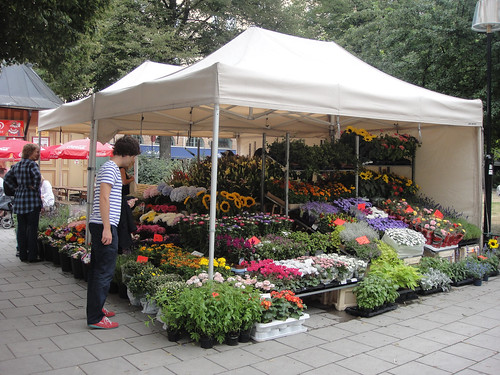
Near where I live, the gay hood is bubbling in cafés, restaurants, bars and antique furniture stores. Mariatorget is a cozy square to sit and watch life go by.

Buy fresh flowers to be a good guest - whenever you're invited for dinner, take some and a bottle of red.

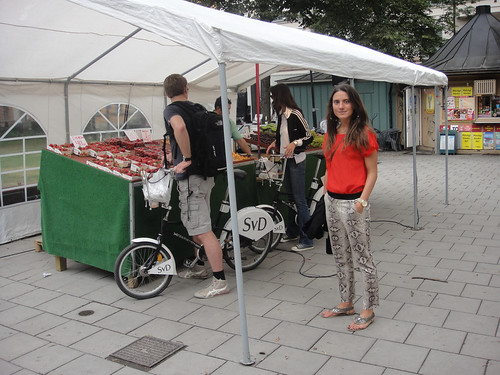
Taste some fresh berries, locally grown.

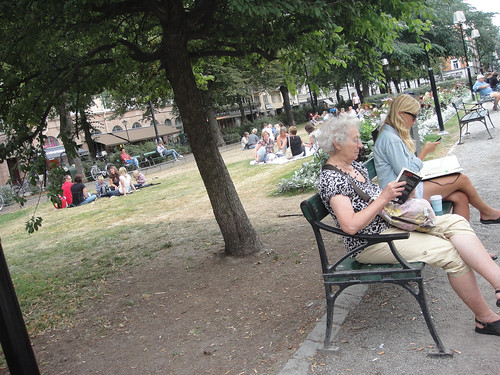
Enjoy the quiet environment with a book and a picnic.


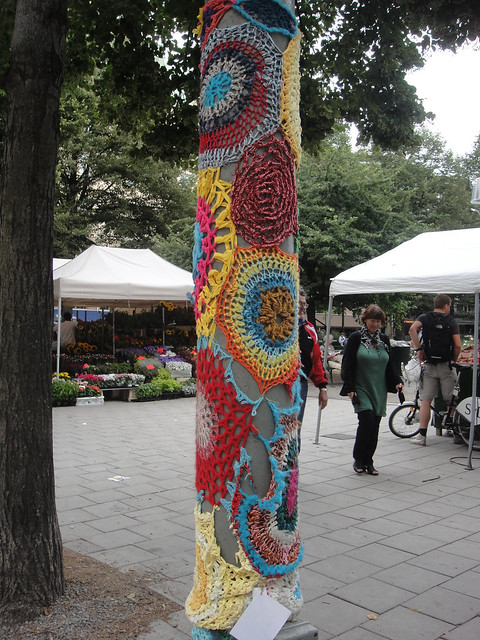
Watch some guerrilla art! Who said that beauty could never come free?

View Post

17.6.11

Melancholia

Trier's main idea for the film was to dramatise how a depressive person reacts more calmly than others in a situation of disaster.


Cuando la tristeza es parte de tu ser, una catástrofe puede resultar liberadora, dado que no tienes nada que perder. Sin embargo, el que sonríe al nuevo día no acepta que el mundo se derrumbe de repente.

Quizás el pesimismo existencial sea la clave de la madurez, de la aceptación de la realidad y del estoicismo apático. Esos que tanto he criticado en mi adorada madre. Ahora entiendo por qué se abstiene de reaccionar, cómo consigue mantenerse impasible ante el drama que la envuelve. Simplemente, ha vivido demasiado en la oscuridad, hasta que se ha convertido en parte de su realidad. Haga lo que haga, no puede empeorar.

De su calma, cual Kirsten Dunst. Apilando palos con los que construirme una cueva mágica en la que me pudiera resguardar. Gracias Lars, por darme un nuevo ángulo desde el que comprender mi turbulenta infancia así como la soledad de mi querida mamá.
View Post

14.12.09

One size fits all.


Terry Richardson rockin' V Magazine [via models.com]


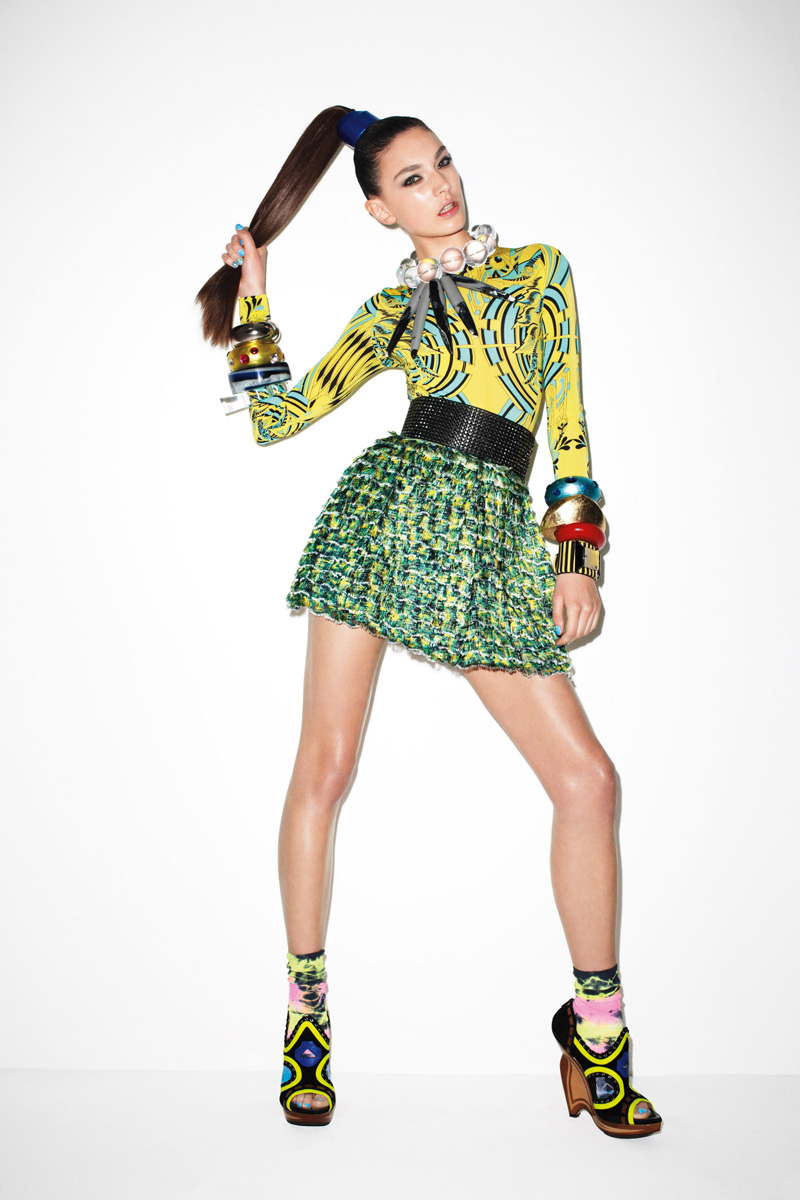
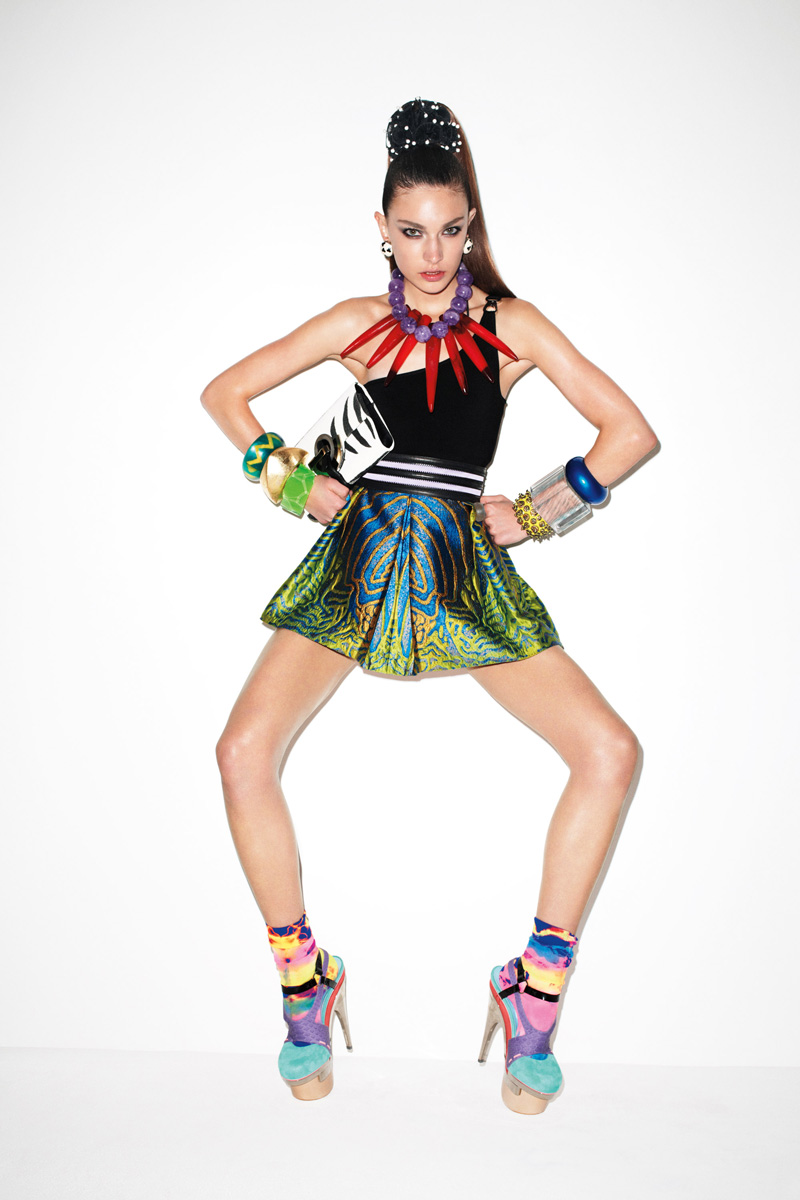
Terry es, junto a David, uno de mis fotógrafos favoritos. Siempre provocando con fotos coloridas y temas controvertidos, tocando la fibra del momento. Mucho color y poca tela. Algo positivo en lo que pensar, cuando estás rodeada de tanta nieve :P

Lara o Anja? Doutzen o Natasha? La belleza está en el ojo del que mira y los cánones son algo muy personal... Sobre lo que no merece la pena discutir.
View Post

10.11.09

Kimono Fusion

Photobucket

Photobucket


KIMONO FUSION

From the ultra traditional to the hyper modern
13th September 2009 to 24th January 2010

the museum of far eastern antiquities opens in autumn 2009 with a japanese fashion show that starts with the kimono and in a playful way springs into various japanese subcultures and fashion trends of today. East meets west, old meets new, real meets fake.

Photobucket

Obis hanging around.

Photobucket

Street origami

Photobucket

Photobucket

Cosplay & No theatre.

Photobucket

New styles, made out of old kimonos.


The exhibition features exquisite vintage kimonos that puts dazzling textile techniques on display,
Mixed with creations by some of japan’s hottest young designers and artists – from takyua angel’s spectacular creatios to street-smart childish designs by shojono tomo. Handmade accessories for young geishas are shown side by side with the graffiti artist shin tanaka’s murals and hip hopish origami figures inspired by the elaborate patterns of ancient kimonos.

The exhibition is a joint arrangement with Rekostylisterna: Aia Jüdes and Sanna Gebeyehu.

Photobucket


ANREALAGE

Kunihiko Morinaga
born in 1980, Tokyo, Japan

The motto of young designer Kunihiro Morinaga is »God is in the details.« He and his team want to explore and enhance things that ordinarily do not catch our attention. There is tension when we observe ordinary things and discover their extraordinariness. Using this observation as a catalyst, his simple, urban clothes get an imaginative twist.

The name of Morinaga’s brand, »nrealage,« comes from a personal play on words and is made up of the words »real, unreal, and age.« His collections are conceptual and presented as installations and performances.

Morinaga plays with possibilities and extend the limits of our perception of ordinary clothes and their design.

Photobucket


SUZUKI TAKAYUKI

born in 1975, in Aichi, Japan


With his latest collection, »Tangled«, Suzuki shows his designs in Sweden for the first time. One of Japan’s most exciting young fashion designers, he is well-known for his organic, experimental designs, and his clothes balance between fashion and art.

With subtle intuition, Suzuki combines extremely well tailored elements with tattered and threadbare one. Natural materials and needlework of the highest quality mix with loose threads, tears and sometimes stains.
By exploring and appraising things that lack value in the eyes of most people, he brings about an unexpected kind of beauty that teaches us to see clothes in a new light.

ORIGEN DE LOS LIBROS


Una de esas cosas, que deben de ser obvias para la mayoría, pero no lo son para mí.

Por qué son los libros así? Pues porque a los chinos, los rollos de 60m les resultaban demasiado largos. Así que decidieron plegarlos, dejando las letras fuera.

Photobucket

Y si te dedicas a coser lo que queda en medio, qué consigues?


Photobucket

Exacto


Photobucket

Trying out a kid's kimono.

View Post
© dontplayahate. All rights reserved.
DONTPLAYAHATE